We’re living in interesting times.
I know I’m not the only one who’s finding it challenging to stay focussed on the day-to-day against the backdrop of the U.S.-Israel war against Iran. Whether it’s holding space for friends who’re directly affected by the conflict, soaring gas prices, or constantly checking the news and social media to find out the latest developments, it’s a lot.
What’s happening in the Middle East also hits close to home. I am a third culture kid who was born in Sri Lanka, raised in India and Oman, and moved to Canada when I was 15.
There is something disorienting about watching places you know and that shaped you reduced to ‘conflict zones’ on a map.
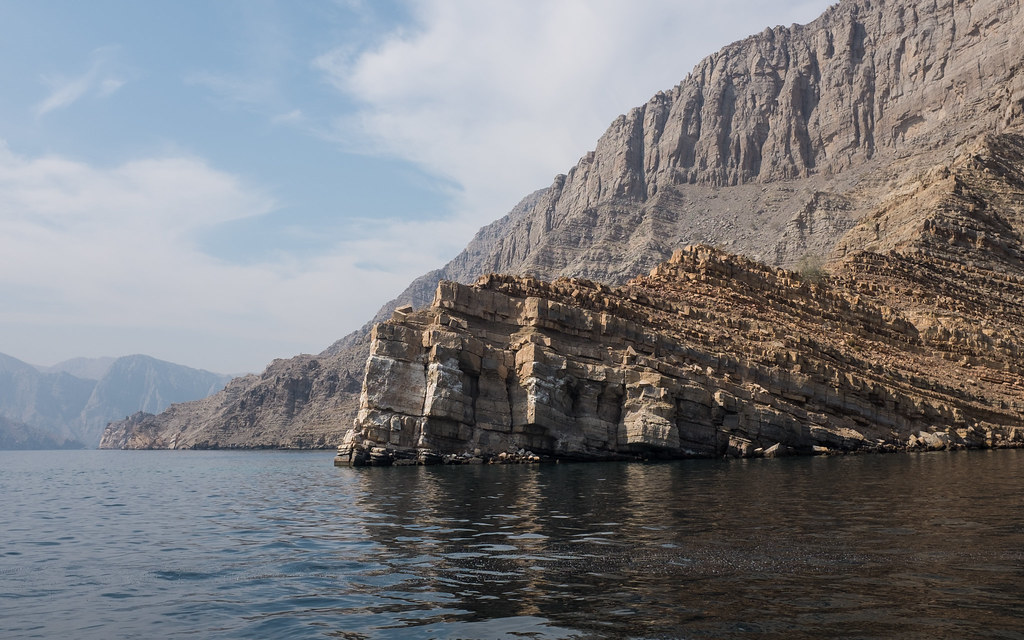
When I was a child living in Oman, a country of rugged mountains, desert dunes, and a coastline that glitters in the heat, Iran was just across the water.
Oman and Iran are separated by the Strait of Hormuz. The Strait is a narrow channel of water (48 kilometres wide at the narrowest point) connecting the Persian Gulf to the Gulf of Oman, and then out to the Arabian Sea and the rest of the world. Twenty percent of the world’s oil and liquefied natural gas passes through the Strait, and its closure has sent shockwaves to every corner of the globe.
To me, the Strait of Hormuz is not just a commercial shipping corridor, it is a natural border that separates the place I grew up from the place next door, which is now at the centre of the news.
Oman has maintained strategic relations with Iran for decades, a relationship built on geography and pragmatism rather than ideology. In March, Prime Minister Carney called the Sultan of Oman, H.M. Haitham Bin Tariq Al-Busaid, to convey Canada’s appreciation for Oman’s stabilizing role in the region. Two leaders. One phone call. Fifty years of bilateral relations. For most Canadians, that’s a footnote. For me, it’s personal.
I remember feeling something I didn’t immediately have a word for when I heard the news about the call. It wasn’t pride, relief or curiosity exactly. It was something closer to grief.
I am the proud dad of two amazing kids. And I honestly don’t know what to tell them about the world right now. It’s not because I don’t have opinions. It’s because the usual frameworks I know and rely on don’t work or make sense in this new world order.
The ceasefire is fragile and probably even more fragile now given that the Pakistan-brokered peace talks broke down over the weekend. The humanitarian toll is already staggering. The leaders making the biggest decisions seem to be driven by impulse not strategy, and by ego not consequence.
Here’s the thing I keep coming back to: we talk a lot about the world we are leaving our children. We say it in speeches and mission statements. But most of us, myself included, are so consumed by our own navigation of this moment (and our lives), financially, emotionally, organizationally, that we have quietly stopped asking the harder question.
What are we actually doing about it?
I’ll be honest. Most days the answer is: not much. We donate, we share posts, we have conversations around the dinner table and then we move on because we have to. Because there are mortgages and bills to pay, school pickups to do and staff who need leadership and deadlines that don’t care about geopolitics.
The feeling of helplessness is real. But I think we need to stop confusing individual helplessness with collective inaction. Because Canada, as a country, is not helpless here.
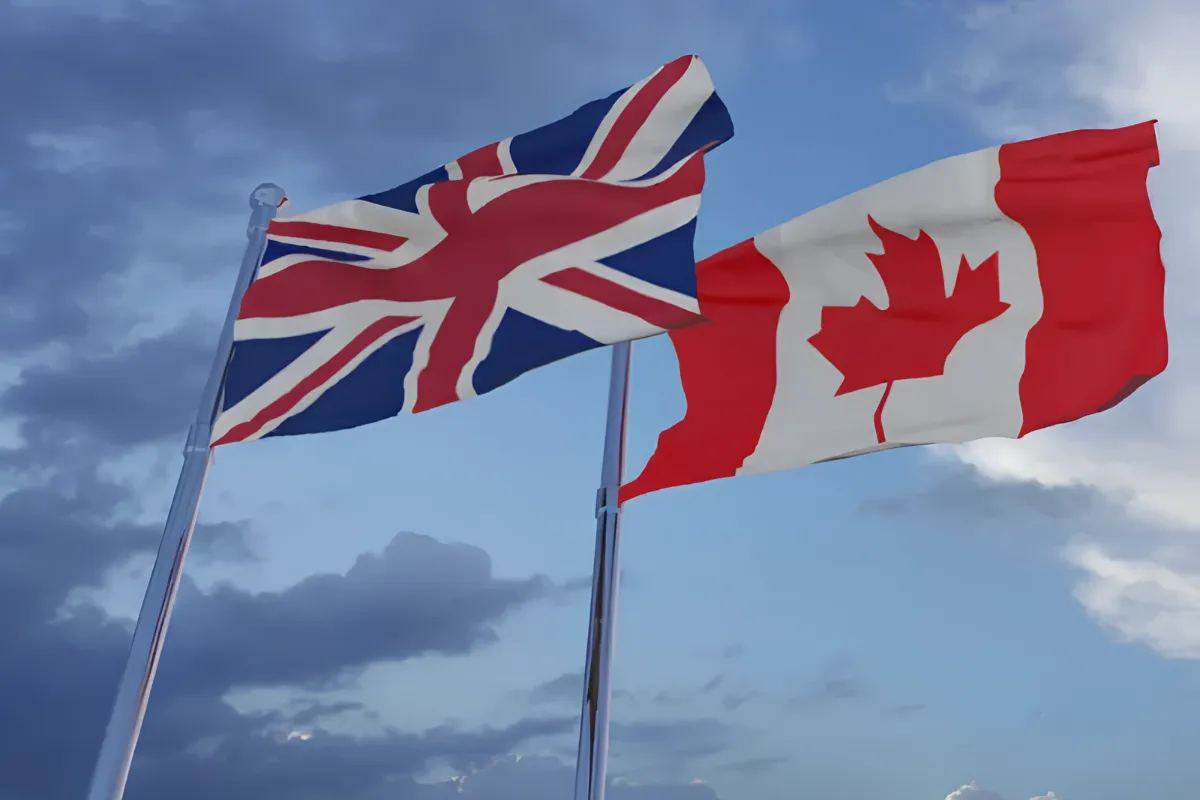
Canada has a specific role to play and we keep leaving it on the table. We are a nation that has historically understood the value of multilateral relationships, of diplomacy that does not require us to pick a side every 48 hours based on whoever posted on social media last. We have friends in the Gulf. We have relationships across the Global South. We have a diaspora population that carries the lived complexity of these conflicts in their own family histories. Canada is home to over 200,000 people of Iranian heritage, including members of my own extended family. The Iranian diaspora in Canada is one of the largest communities outside Iran. This is not a liability. This is a foreign policy asset we have never fully used.
I run a group of companies. I show up every day and try to build something that matters. I have a team that is carrying this weight too. And what I have learned, in business and in community work, is that purpose does not survive prolonged uncertainty on its own. You have to keep naming it. You have to keep choosing it, even when it is hard to see.
I don’t have a neat answer to the title of this post. But I don’t think hope is gone. I think it’s waiting for us to stop outsourcing it to world leaders who have shown, repeatedly, that they cannot be trusted with it.
No one is coming to save us. It’s up to us now.