For decades, Ottawa has spoken reverently about the North while treating it as a line item rather than a national imperative. We commission reports. We host consultations. We promise investments “over time.” And then we act surprised when others begin to treat Canada’s Arctic as if it were up for negotiation but we know it isn’t.
But sovereignty, like credibility, only exists if we are prepared to defend it.
A Senate report issued just three years ago warned bluntly that Canada’s Arctic was under-secured, underdeveloped and dangerously exposed in a rapidly changing world. The military was stretched. Infrastructure was inadequate. Climate change was accelerating access to Arctic waterways and resources. Global powers were paying close attention.
That warning is now no longer abstract. Since President Trump’s return to the White House in 2025, the language has become explicit. Canada’s sovereignty has been openly challenged. Greenland’s too. Canadians should stop pretending this is bluster. Great powers test the boundaries of seriousness. They push where resistance is weakest. And Canada’s habit of confusing politeness with strategy has made the Arctic look dangerously negotiable.
The problem is not that Ottawa has said the right things. The problem is that northerners have heard it all before.
When Foreign Affairs Minister Anita Anand recently outlined new defence commitments—submarines, surveillance vessels, helicopters—the reaction from the North was not gratitude. It was skepticism. Harry Flaherty, president of the Qikiqtaaluk Corporation in Nunavut, captured it perfectly: the gap between words and action in the Arctic is not new. It is structural. And with new threats now visible, delay is no longer neutral. It is reckless.
We have already seen what hesitation looks like in practice. When a Chinese surveillance balloon entered Canadian airspace through the Arctic in 2023, our closest fighter jets were grounded by freezing rain. An American jet shot it down for us. That moment should have been clarifying. Instead, it was quietly absorbed into the background noise of Ottawa process.
Here is the uncomfortable truth we must face as Canadians: The Arctic makes up 40 per cent of our landmass and 75 per cent of our coastline, yet fewer than one per cent of Canadians live there. It holds immense reserves of natural gas and rare earth elements critical to clean technology and modern defence systems. And yet it remains thinly populated, poorly connected, and short on quality housing and infrastructure.
Meanwhile, Russia operates more than ten Arctic military bases. Chinese state-linked firms are acquiring stakes in northern resource projects and cultivating relationships with Indigenous governments. Others are not waiting for Canada to “get around to it.”
As Northwest Territories Premier R.J. Simpson put it recently, the Arctic is the soft underbelly of North American defence. In winter, access routes are fragile lifelines. Climate change is disrupting traditional transportation corridors. Security and basic mobility are now inseparable.
Former Foreign Affairs minister Lloyd Axworthy has argued that Canada should lead a new diplomatic effort with like-minded countries—an “arc of solidarity” stretching from the Baltic through Scandinavia, Greenland and across the Canadian Arctic.
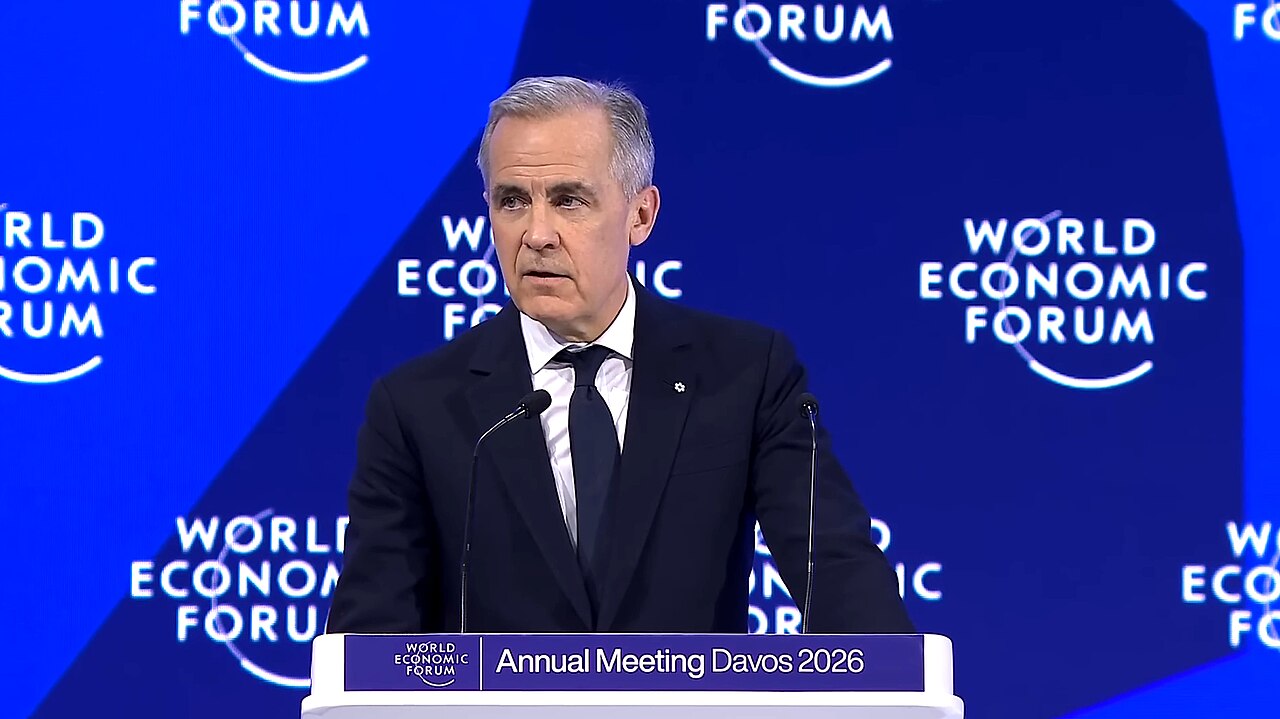
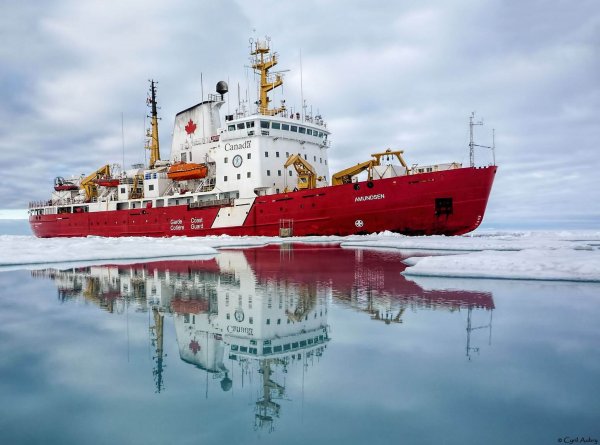
Prime Minister Mark Carney understands risk. At the World Economic Forum in Davos, he spoke clearly about securing the Arctic and accelerating investments in NATO’s northern flank. His government has announced new radar systems, submarines, aircraft, and a $1-billion Arctic Infrastructure Fund, alongside investments in Yellowknife and Inuvik.
These are necessary steps. They are also overdue.
Canada must prove that this action will match the rhetoric. As foreign governments look to Canada’s north, our sovereignty depends on swift action to defend and secure our Arctic.
If we want the world to take our sovereignty seriously, we must start by taking it seriously ourselves.