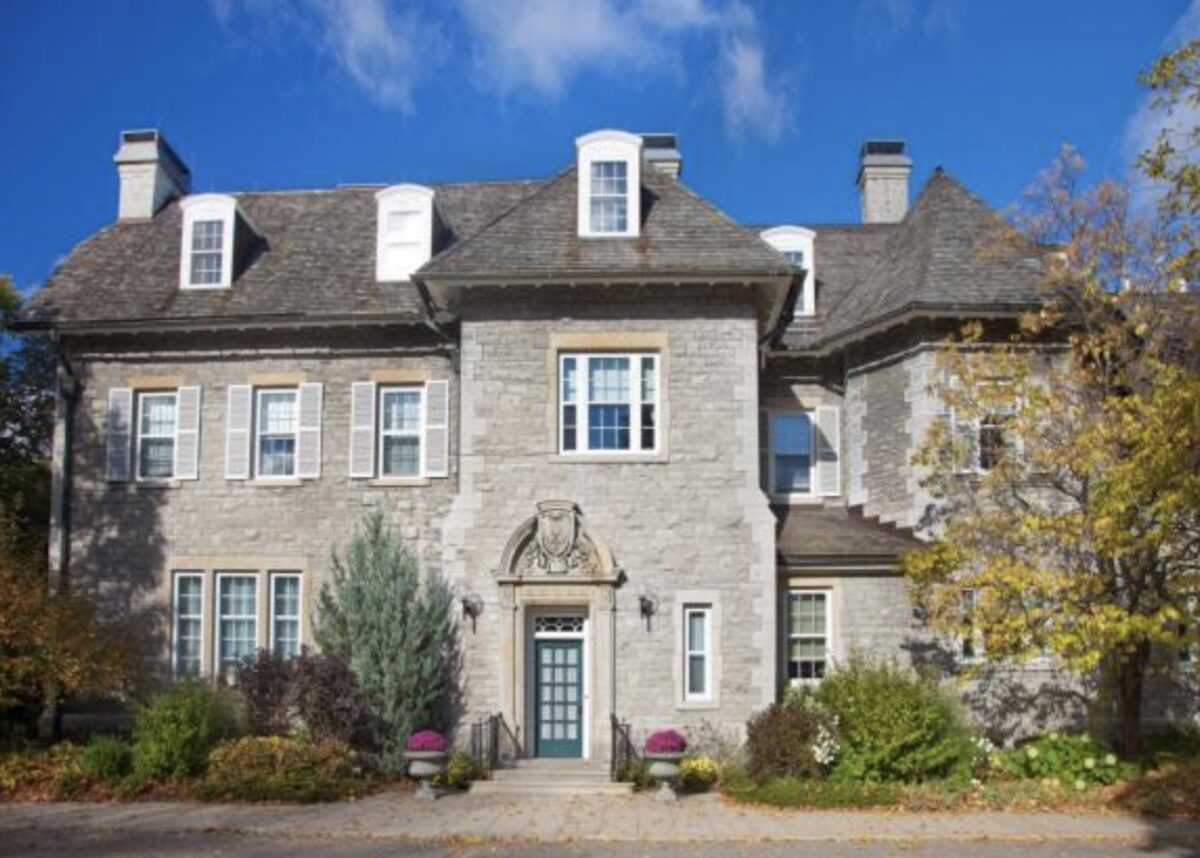
In January, in a Davos address urging middle powers to unite and create a third way, Prime Minister Mark Carney warned: “If we’re not at the table, we’re on the menu.” Ironically, here at home, Carney’s table is in Rideau Cottage – a residence just over one kilometre from 24 Sussex Drive, that lacks both the security and functional space for a sitting prime minister.
The 19th-century home became the official residence for the prime minister in 1951. Since 2015, when Justin Trudeau became prime minister and refused to move his family into the deteriorating residence, the building has been vacant. For years, leaders have allowed politics to prevent necessary renovations for fear of a backlash at the ballot box. On June 26, Carney said his government was “acting to protect our heritage” by launching a contest to revamp the residence and a fundraising campaign to restore this heritage home.
“At a time when much of the world is buffeted by crisis, Canada’s history, our institutions and our traditions matter more than ever,” Carney told reporters outside 24 Sussex.
Since he launched his campaign to be prime minister in March 2025, Carney has been promoting Canadian unity, urging Canadians to put their “elbows up” in defiance against U.S. President Donald Trump and announcing investments to build up the country. Our elbows should have been up long ago—but better late than never. So, it comes as no surprise that he would be the prime minister to appeal to Canadians on the need to invest in a building fitting for future prime ministers and the demands of this office.
This message comes days before Canadians celebrate Canada Day and before Carney will meet with NATO leaders, including Trump, in Ankara, Turkey. The two-day meeting in July will give Carney a chance to meet again with middle power leaders in Europe, leaders he has been courting to join forces to counter the “era of great power rivalry.”
In June, during a press appearance with Ireland’s Taoiseach Micheál Martin, Carney said, “The new world order will be built starting with Europe,” and that “Canada is the most European of non-European countries.” Martin, who in July will hold the rotating Presidency of the Council of European Union, fully supports Carney’s message and told reporters his presidency will push to further strengthen these relations.
Carney is engaged in closer ties with Europe and Asia as the U.S. continues to slap tariffs on countries around the world, and Trump dismisses Mexico and Canada while negotiators work on the trilateral trade agreement. We still need a trading relationship with the U.S.; however, the global upheaval created shortly after Trump came to power has forced Canada to diversify trading partners. This includes finding new trading partners or re-establishing trade ties with countries where interests align, not necessarily our values, such as China and India. Trade relations based on interests is good business, and it is something we should have adopted long before we were forced into it.
Carney is fully engaged in this new middle power path, including collaboration with other countries in areas such as energy and security. Leaders around the world have noticed, and they are coming to Canada to have a seat at the table. And that gets us back to the Prime Minister’s table. As Canada takes on a leadership role for middle powers in this new global dynamic, our prime minister must have a home to host leaders that is both functional and secure. A home worthy of the country we are choosing, finally, to become.