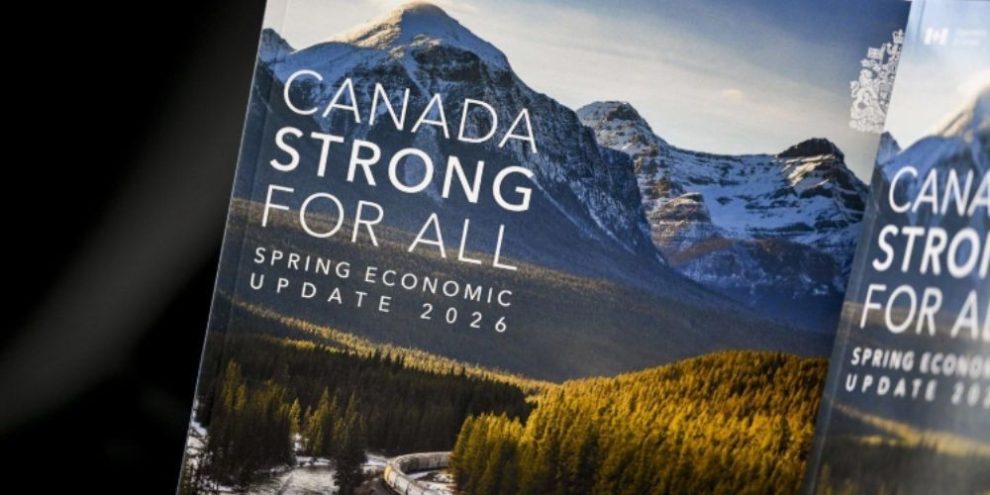
When the federal government released its Canada Strong: Budget 2025 in November, Canadians were told that the economy needed to be diversified beyond the U.S. and that they should brace for profound economic change. More than five months later, with a war raging in the Middle East that has closed the Strait of Hormuz, Canadians learned in the Canada Strong for All Spring fiscal update on April 28 that Ottawa’s priority is spending billions to build a stronger, more resilient economy as the world grapples with a convergence of complex interrelated challenges.
The fiscal update includes $37 billion in new spending, with $6 billion of that to be spent over five years to hire and train between 80,000 and 100,000 Red Seal skilled trade workers. The Fall budget also included a boost to the apprenticeship program in the Red Seal trades to increase labour capacity in infrastructure projects. Red Seal trades are governed by regulations under the Provincial and Territorial Acts.
Investing in more skilled trade workers is necessary for Carney’s promise to build homes and projects of national interest, which is key in his plan to make Canada more resilient. 2025, to fast-track large-scale energy, trade and transportation projects.
The push for more trade workers in the fiscal update is aimed at getting more young people who are facing increasing labour market challenges, to enter the skilled trades profession. While this is a good step, it won’t be enough to address the ongoing labour shortages in sectors like health care, where more Personal Support Workers (PSW), are needed to serve a large aging population. Ensuring workers are trained and have the necessary certifications before they arrive in Canada will also help address those shortages to build a strong Canada.
For months Prime Minister Mark Carney has been travelling the world to promote new trade relations and reduce our reliance on the United States. Nine days before the fiscal update, Carney spoke directly to Canadians in a YouTube video saying, “Many of our former strengths, based on our close ties to America, have become our weaknesses, weaknesses that we must correct. Workers in our industry most affected by U.S. tariffs in autos and steel, in lumber, are under threat. Businesses are holding back investments restrained by the pall of uncertainty that’s hanging over all of us.” Those tariffs have cost companies millions of dollars and left many workers without a job because of lost revenue. While Canada should never have become so reliant on its southern neighbour, the government is making new trade alliances a priority.
Days after Carney’s video address to Canadians, he announced the Canada Strong Fund with a federal investment of $25 billion to invest in Canadian projects that he says are needed to make us more resilient and less reliant on our southern neighbour. Yet while this investment is necessary, Canadians are struggling with fluctuating gasoline prices and increasing grocery bills because of the closure of the Strait of Hormuz. While the federal government suspended its 10-cent-per-litre tax to help Canadians, the economic challenges for many households remain. While the investments the government announced in its federal budget are necessary for the Canada Strong approach, there is little financial assistance to help Canadians with these rising costs.
Hours before the fiscal update was tabled in the House of Commons, the Prime Minister’s Office announced that in early May, he will travel to Armenia to attend the European Political Community Summit, where he will continue to pitch Canada as a place to invest. This follows an announcement a few weeks earlier that he will host CEOs from around the world at the first-ever Investment Summit in September. A push to get overseas investment in our resources requires more skilled trade workers.
Canada Strong is the running theme for this government — big projects, big commitments, and a bet on Canadian workers. But if skilled trades training doesn’t extend beyond our borders, that resilience will not be as strong as needed to meet the challenges ahead.